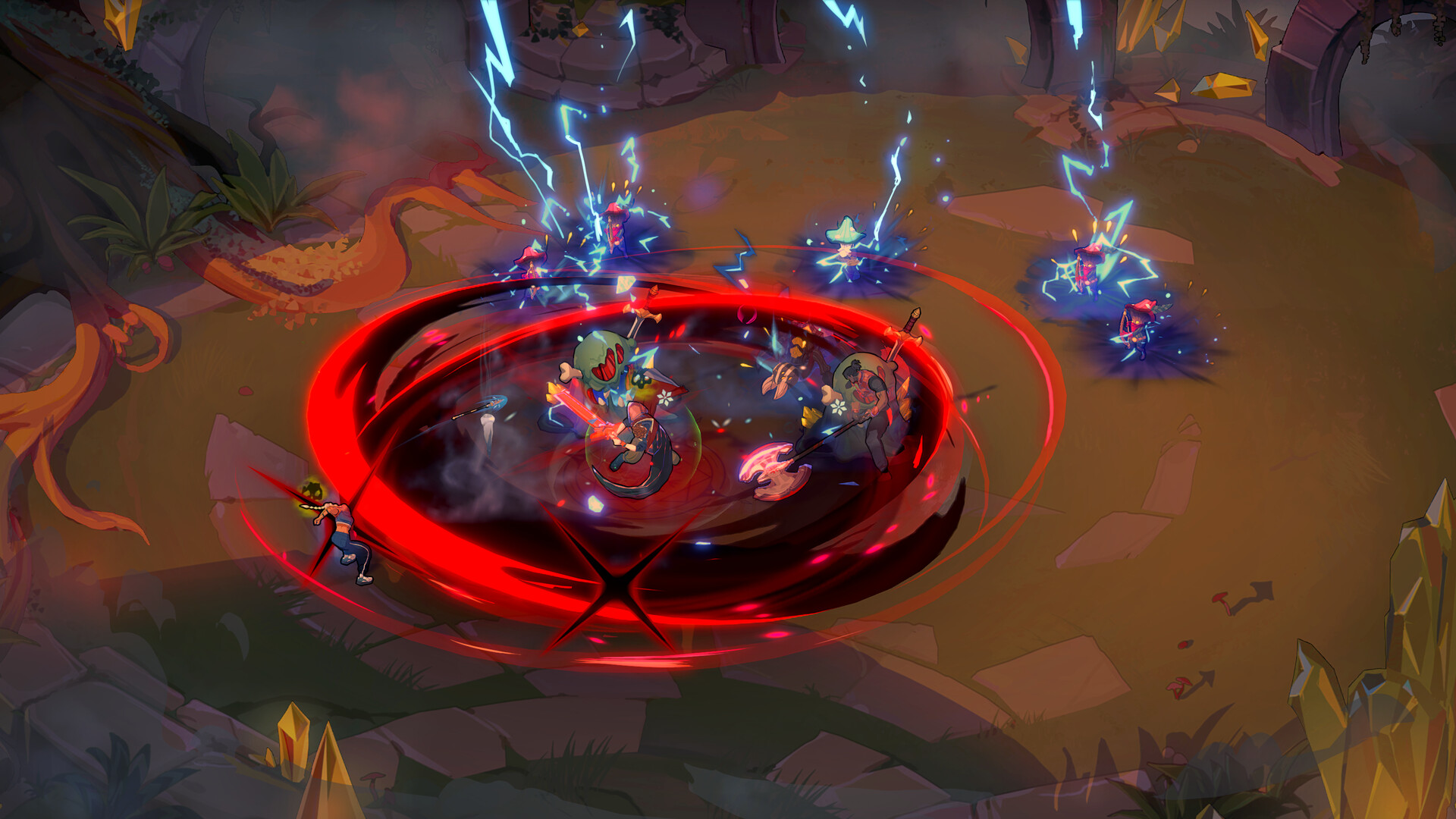
These are traceable community examples, not official team recommendations or independently reproduced current-patch results. Use their conditions and risks to decide whether they fit the run in front of you.
The Guildrun best team is not one permanent roster. Guildrun is a single-player PvE autobattler, so difficulty, draft offers, specializations, items, relics, positioning, and patches can all change the right decision. This page collects a small set of traceable community Guildrun comps and makes their limits visible. Each example shows its core heroes, role coverage, basic positioning idea, conditions, risks, source, and version check. Official material establishes the Demo and patch context; the actual team examples come from community discussions and are not official recommendations. None is independently reproduced for Update 0.5.1 on this site, so every card is marked Retest required. Use a setup only when your run has its essential function already available, then pivot toward stable roles when it does not.
What makes a strong Guildrun team
A useful team comp begins with functions, not a list of hero names:
- Stability first. The board needs enough frontline, protection, or control to act before a delayed engine becomes relevant.
- One clear damage or scaling direction. Rush, Shards, Stall, Frost, and debuff effects can matter when the matching heroes and offers appear together.
- Positioning is part of the comp. A frontline anchor and protected damage pieces describe a role plan; the exact hexes still depend on enemy targeting.
- Mode changes the trade-off. Red Rift’s death pressure can reward a compact, well-equipped core, while a longer run may have room for a flexible support or backup slot.
Guildrun best team comps at a glance
This is not a ranked list of guaranteed best teams. It is a transparent index of current community-reported directions, their intended goal, and why each needs a current-version check.
| Comp | Primary goal | Core heroes | Best fit | Evidence |
|---|---|---|---|---|
| Compact Kai + Sal Red Rift core | Red Rift | Kai as the reported frontline anchor. | A reported Red Rift completion, not a general early-run recommendation. | Retest required |
| Rip + Nyx Rush duo shell | Rush core | Rip and Nyx are repeatedly named together in community discussion as a Rush-triggering pair. | A community-reported Rush direction, including Red Rift discussion. | Retest required |
| Stall / Poison support shell | Stall shell | Skorn and Pimenta with a Mage upgrade are named alongside Pollen, Nyx with a Stall direction, and a tank or Vanguard. | A player-reported delayed-fight setup that reached Endless 22 on SS. | Retest required |
| Shard-scaling carry core | Shard scaling | A community Endless discussion names a Shard-generating Duelist such as Irini, Nyx, or Tilly as a carry direction. | A community-reported SSS Endless direction for players already seeing Shard generation. | Retest required |
Community Guildrun team comps
The four Guildrun team comps below are editorial summaries of named community examples. They are deliberately presented as conditional cores or shells rather than fixed recipes. Check the source and version label before committing a run around any one of them.
Positioning, substitutions, and draft decisions
- Give each slot a job. Start with a frontline anchor, a damage or scaling direction, then add protection, control, or a backup only when it improves the next fight.
- Protect the part that enables the comp. Keep a fragile generator, caster, or delayed-scaling carry away from opening pressure when the encounter permits it.
- Do not force a missing name. If a core hero never appears, retain the function already working on your board rather than exhausting resources for an unsupported replacement.
- Treat a wider board as a costed choice. In Red Rift especially, another hero needs enough upgrades, items, and survivability to justify more death risk.
- Re-evaluate after a patch. A source without an update label is a lead to inspect, not proof that a current run will play the same way.
How Guildrun comps differ from builds and tier lists
A Guildrun best comp answers which roles and heroes can work together under stated conditions. A Guildrun build goes deeper: specializations, items, relics, and a run’s specific pivot path. The Guildrun tier list compares individual heroes and their situational strengths, but an individual rank does not automatically produce a complete board.
Use the Heroes directory to inspect the available roster, the Beginner Guide for first-run role coverage, and the Red Rift guide when the death limit, missions, and economy are the actual constraint.
Patch watch and evidence limits
This page is checked after Demo Update 0.5.1. The developer’s notes confirm that high-difficulty balance, including Red Rift and Endless, is sensitive to specific heroes and interactions. The patch also changed the Rush trigger behavior associated with Rip and Nyx. That means a pre-patch post, screenshot, or one-off community clear is useful context but cannot be represented as a current, universal best Guildrun team.
The practical rule is simple: use community reports to recognize a compatible direction, keep the conditions visible, and prefer a stable pivot whenever the essential engine does not appear.
Frequently asked questions
What is the best team in Guildrun?
There is no official, universal best Guildrun team. The most useful choice depends on the current mode, the heroes and upgrades actually offered, and whether the board can survive long enough for its engine to work. This page presents dated community examples, not a permanent ranking.
What is the best Guildrun comp for beginners?
Start with role coverage rather than forcing a named comp: keep a stable frontline, a reliable damage source, and only add a support or scaling piece when it solves a visible problem. The Beginner Guide explains the early draft and positioning decisions in more detail.
Which Guildrun team is best for Red Rift?
Current community discussion frequently favors a compact, well-equipped core for Red Rift because its hero-death pressure makes weak extra slots costly. Kai-based, Rush, Shard, and sustain shells are reported examples, but none is an official or independently reproduced 0.5.1 answer on this page.
Can I use a Guildrun team comp without every hero?
Yes. Preserve the documented job—frontline, damage, sustain, trigger generation, or scaling—before chasing every listed name. A partial shell with stable roles is safer than rerolling away a functioning board for an unverified one-for-one replacement.
How are Guildrun comps different from builds?
A team comp explains which heroes work together, their roles, and a basic formation. A build goes deeper into a hero or engine’s specializations, items, relics, and decision path. Use the Builds guide when you need that item-level detail.
Which Guildrun Demo version is this page checked for?
This page was checked on July 25, 2026, after the public Demo Update 0.5.1 notes. Community examples without a matching in-client or source version label remain marked Retest required.
Are these team recommendations independently tested?
No. They are editorial summaries of linked community discussions. Official sources establish patch context only; this site uses Community reported or Retest required until a current-version reproduction record is available.
Sources consulted
Official sources are used for the Demo and patch baseline. Community discussions are used for player-reported team examples and remain clearly labeled. All links were checked on July 25, 2026.